FIZI · Shopify
From rented apps to owned commerce.
FIZI has Shopify stores in Ukraine, Poland and Spain. We moved some app functions into the theme and Shopify’s built-in tools. We built our own review app; the stores are still moving to it.
Food & beverage · D2C · Three markets
One job, several monthly bills.
Across three stores, small jobs sit in separate tools. Each adds another bill, dashboard or point of dependence.
Repeated app stacks
Bars, badges, cart features and accounts were split across paid tools on different stores.
Bills tied to usage
Email pricing depends on list size. Other apps charge based on order volume and available features.
Data held by vendors
Reviews and customer workflows depend on a provider when their records live in an app.
Extra storefront scripts
Each storefront app adds code to load and maintain, with its own behavior to check.
A clear home for every job.
We moved the storefront into the theme and used Shopify for the sitemap and translations. We built our own review app. We kept delivery and legal services. Email migration is planned separately.
What replaces paid apps
We grouped the app functions by destination. The diagram shows what replaces each function.
Theme functions
Attrac, Prime Product Badges, PH Breadcrumbs, qikify Slide Cart, Dr Stacked Discounts, Dr Free Gift, Motion, Pify, Froonze, Accounts Concierge
Theme code
Storefront, cart, forms and customer account
Shopify functions
Magical Sitemap, Langify
Shopify features
Sitemap and translations
Reviews
Loox and Judge.me.
Owned reviews
Product reviews, bundle views and rewards
Email
Omnisend on one store, Klaviyo on two stores
Owned email
Flows, segments and sending
Our review app is still in testing. Email migration is planned.
Audit of every app
We listed each app’s price and purpose. We decided which functions to move into the theme or Shopify, and which to keep.
We kept legal compliance services and delivery integrations. We excluded them from the replacement calculation.
- Installed app
Price and purpose
- Check the job
Store-specific need
- Choose its home
Replace, use native, or retain
Storefront and cart in the theme
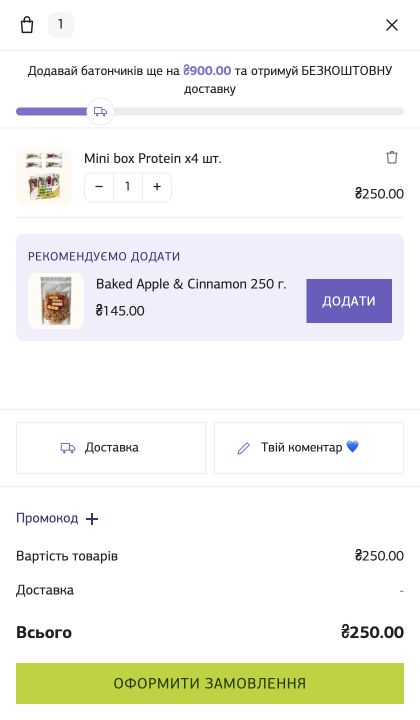
We moved banners, badges and buy buttons into theme sections. One cart now shows discounts and gifts, the amount left for free delivery and an offer to add a product.
Store settings without apps
We moved storefront settings into the theme editor, where changes appear in the preview immediately. We used Shopify’s built-in tools for the sitemap and translations.
Review system
We built FIZI’s own review app. We studied Loox and Judge.me, kept the useful features and simplified the form: customers review the products in their order one by one, adding photos and videos. The same reviews can appear on bundles that include the product.
Text reviews and reviews with a photo or video can earn different discounts. The system automatically creates a discount code and sends it to the customer. The team manages publication in its dashboard; reviews are stored in the company’s database and can be exported.
Email on owned infrastructure
We’re planning email migration separately: subscriber consent, recipient groups and email sequences. We’ll test sending in each store before the switch.
Spain has its own email system. In Poland, we tested Klaviyo review request emails using test addresses. Email migration is still planned.
- Consent
Store-specific contacts
- Flows and segments
Prepare and verify
- Sending
Measure delivery
Search content in the theme
We set page descriptions and product links in the theme. Shopify generates the sitemap without a separate app.
This shows the theme changes. We aren’t yet reporting their effect on search rankings for the three stores.
- Product and collection
Page content
- Theme description
Description
- Sitemap
Shopify updates it
Under the hood
The theme handles the storefront and cart. Services process forms and find courier pickup points. Review data is stored separately for each store.
- Theme cart
- Shopify cart
- Storefront reviews
- FIZI Reviews
- Consented email flow
- Sending service
Costs include support, email sending and server operation. The calculation below counts this budget once.
Extra sales in the cart
After replacing the core apps, we added an extra product offer to the fizi.ua cart. It can appear when the cart holds one or two different products and disappears if the suggested product is already there. Customers add it with one button.
The team changes the product and discount in Shopify. Items added through the block are marked in orders, so they can be included in sales analysis. The module runs in the theme without a separate subscription.
Whole-store comparison over equal periods. The contribution of this block was not measured separately.
Projected savings over three years.
The calculation for three stores includes support and running the services. These are projected savings, not money already saved.
Growth-case savings
Three years. Old budget grows 30% yearly.
Flat-cost savings
Three years. Old app budget stays flat.
System costs
Three-year allowance, counted once.
Annual operating costs
Display values rounded to $100Scroll the table to see all columns.
| Year | Apps | Custom system | Annual savings | Total savings |
|---|---|---|---|---|
| 1 | $16,500 | $900 | $15,600 | $15,600 |
| 2 | $21,400 | $1,200 | $20,200 | $35,800 |
| 3 | $27,900 | $1,500 | $26,400 | $62,200 |
- Year
- 1
- Apps
- $16,500
- Custom system
- $900
- Annual savings
- $15,600
- Total savings
- $15,600
- Year
- 2
- Apps
- $21,400
- Custom system
- $1,200
- Annual savings
- $20,200
- Total savings
- $35,800
- Year
- 3
- Apps
- $27,900
- Custom system
- $1,500
- Annual savings
- $26,400
- Total savings
- $62,200
Model assumptions: full cutover before Year 1. The growth case raises the old budget by 30% a year. The flat scenario holds it constant. One-time setup fees are excluded. This is not a return-on-investment or payback claim.
From separate tools to a controlled stack
Launching a promotion
Opening another store
Handling a form request
Collecting a review
Mobile storefront
Growing the email list
Managing translations
Your fractional technical team for operational change.
We cover the technical and strategic sides of AI transformation. We design solutions that actually work in the business, implement them end to end, and never overcomplicate where a simpler path will do.